23 July 2026 · 3 min read
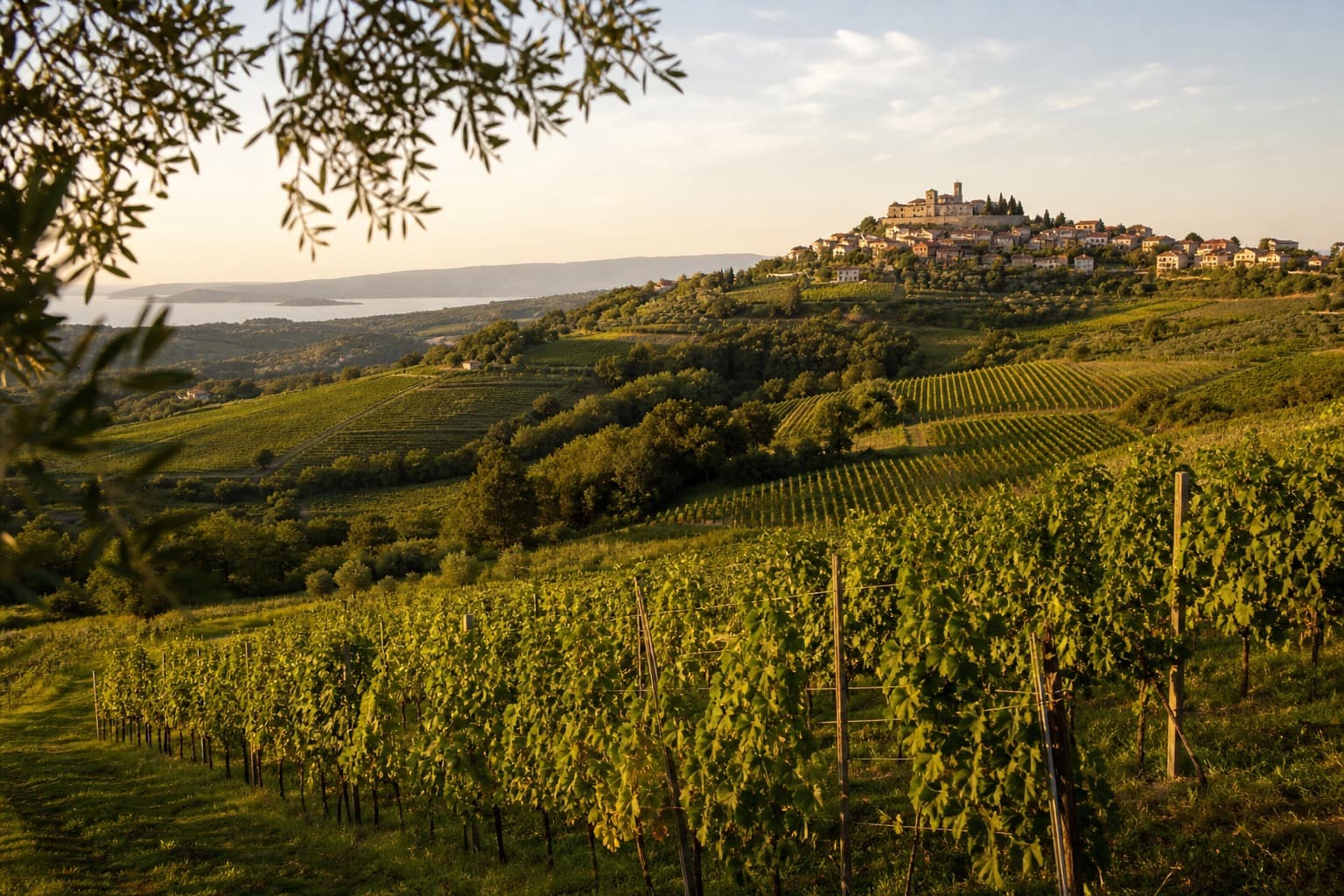
Croatia is what wine travelers call a discovery country: indigenous grapes you can't taste anywhere else, family cellars where the winemaker pours, and vineyard landscapes — hilltop Istria, the vertiginous slopes of Pelješac — that rival anything in Tuscany or the Douro. What it lacks is the tourist machinery, which is precisely the appeal: you'll often be the only table at the tasting.
The question is where to base. Croatia's wine country isn't one region but four, each with its own grape, landscape and style of stay. Here's the map.
Istria — Malvazija, Truffles & Estate Hotels
The wine: crisp, mineral Malvazija Istarska and the brooding red Teran, from hills that look airlifted from Piedmont — with white truffles in the same forests.
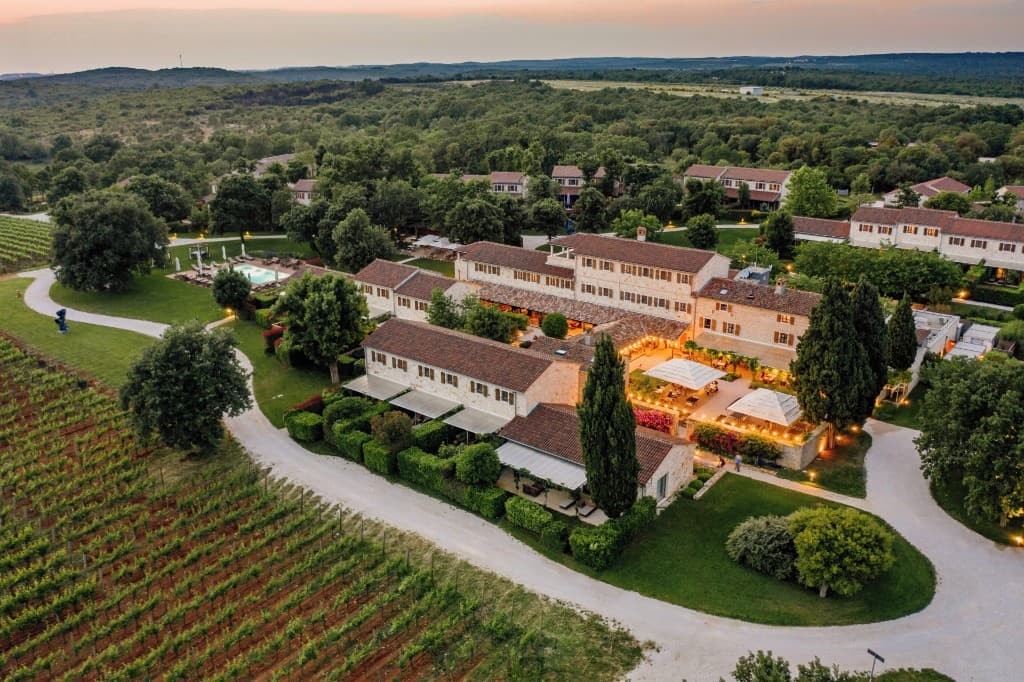
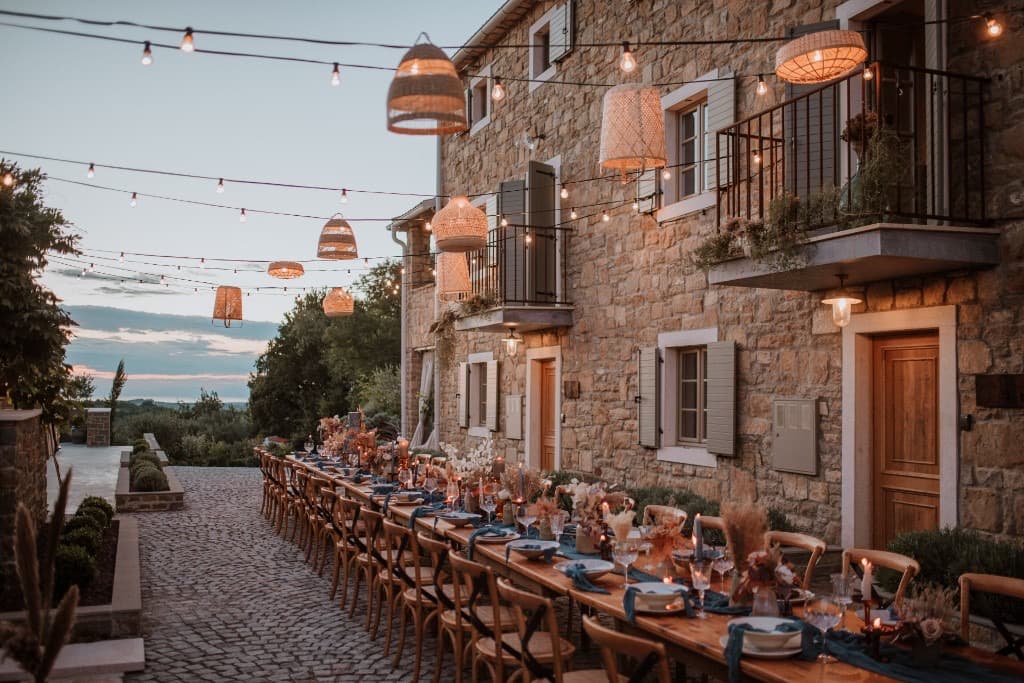
The stay: this is the one region where you can sleep *inside* the wine. Meneghetti Wine Hotel near Bale is a working estate — vineyard dinners, cellar tastings, the property's own olive oil at breakfast. Up in the northern hills, San Canzian Village puts you in a rebuilt stone hamlet ten minutes from the Momjan wine road and the Motovun truffle forests.
Verdict: Croatia's most complete wine-travel region and the natural first choice — full area guide in our Istria article.
Pelješac — Plavac Mali on the Edge of Gravity
The wine: Croatia's most serious reds. On the Dingač and Postup slopes, Plavac Mali vines grow at angles that require ropes at harvest, concentrating sun and salt into powerful, age-worthy wines.
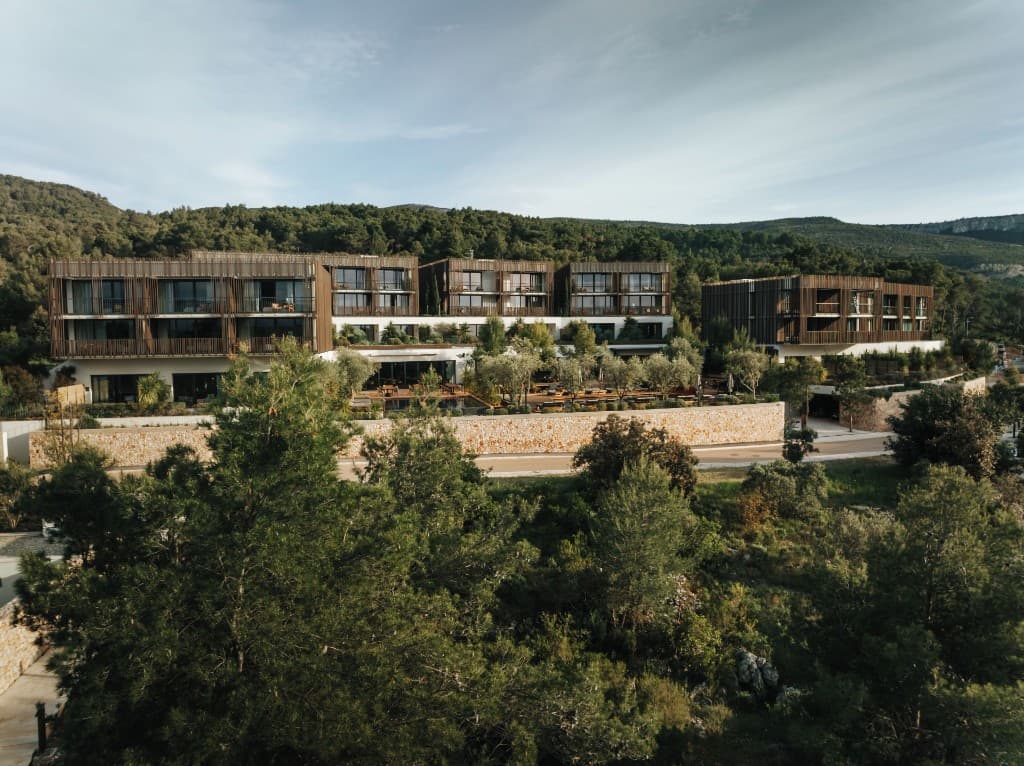
The stay: the peninsula itself is konoba-and-vineyard country without luxury hotels — which is exactly why it works as a day trip. Base in Dubrovnik (75 minutes) and pair the wine road with Ston's oysters, or across the channel on Korčula, where the Orebić car ferry puts Dingač within a morning's reach. On Korčula, Aminess Lume makes a comfortable resort base between tastings.
Verdict: the pilgrimage for red-wine drinkers — plan it as a guided day so nobody has to spit *and* drive.
The Islands — Grk, Pošip & Vines by the Sea
The wine: curiosities that exist nowhere else. Korčula's Lumbarda grows Grk in beach sand; Čara and Smokvica bottle the island's beloved white, Pošip. Hvar's southern slopes — reached through a one-lane tunnel — produce Plavac Mali with a sea view.
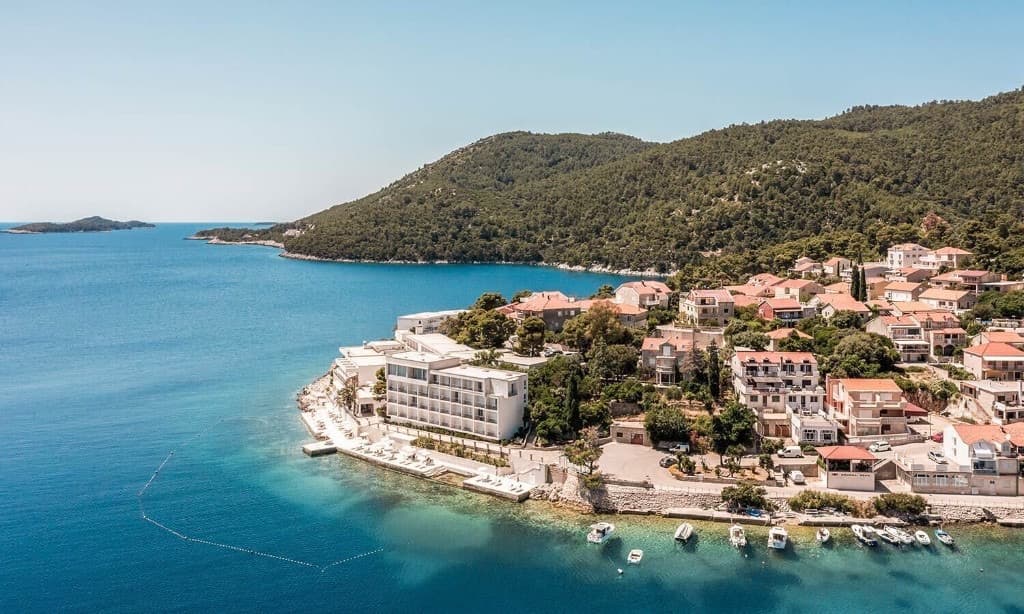
The stay: on Hvar, Maslina Resort sits beside the UNESCO-listed Stari Grad Plain, where Greek colonists planted vines 2,400 years ago — the oldest continuously farmed vineyard landscape in Europe — with the island's wineries an easy driver-guided loop (Hvar area guide). On Korčula, base near the old town or Lumbarda and cycle between Grk cellars.
Verdict: wine as part of an island holiday rather than the whole point — swimming between tastings included.
Zagreb's Hinterland — The Off-Season Bonus
North of the capital, Zagorje's hills and Plešivica's sparkling-wine road make an easy half-day from Zagreb — worth knowing if your trip starts or ends in the city, especially off-season when the coast sleeps.
When to Come
September and October are the answer. Harvest turns every region theatrical — grape trucks in the villages, crush aromas in the cellars, and in Istria the white truffle season opening on top (why September wins). May and June are the green, quiet alternative. August works for islands-plus-wine trips, but book tastings ahead; small cellars fill with yacht traffic.
Practical Notes
- Distances are kind: Istria's entire wine country fits in an hour's drive; Pelješac's road runs 60 km end to end.
- Book tastings 2–3 days ahead at named estates; family cellars often take walk-ins outside August.
- Hire a driver for wine days (€150–350 with a guide) — roads are winding and measures are generous.
- Combining regions: Istria north + Dalmatia south pairs naturally on our 10-day Istria-to-Dubrovnik route — vineyards at the start, island wines at the end.